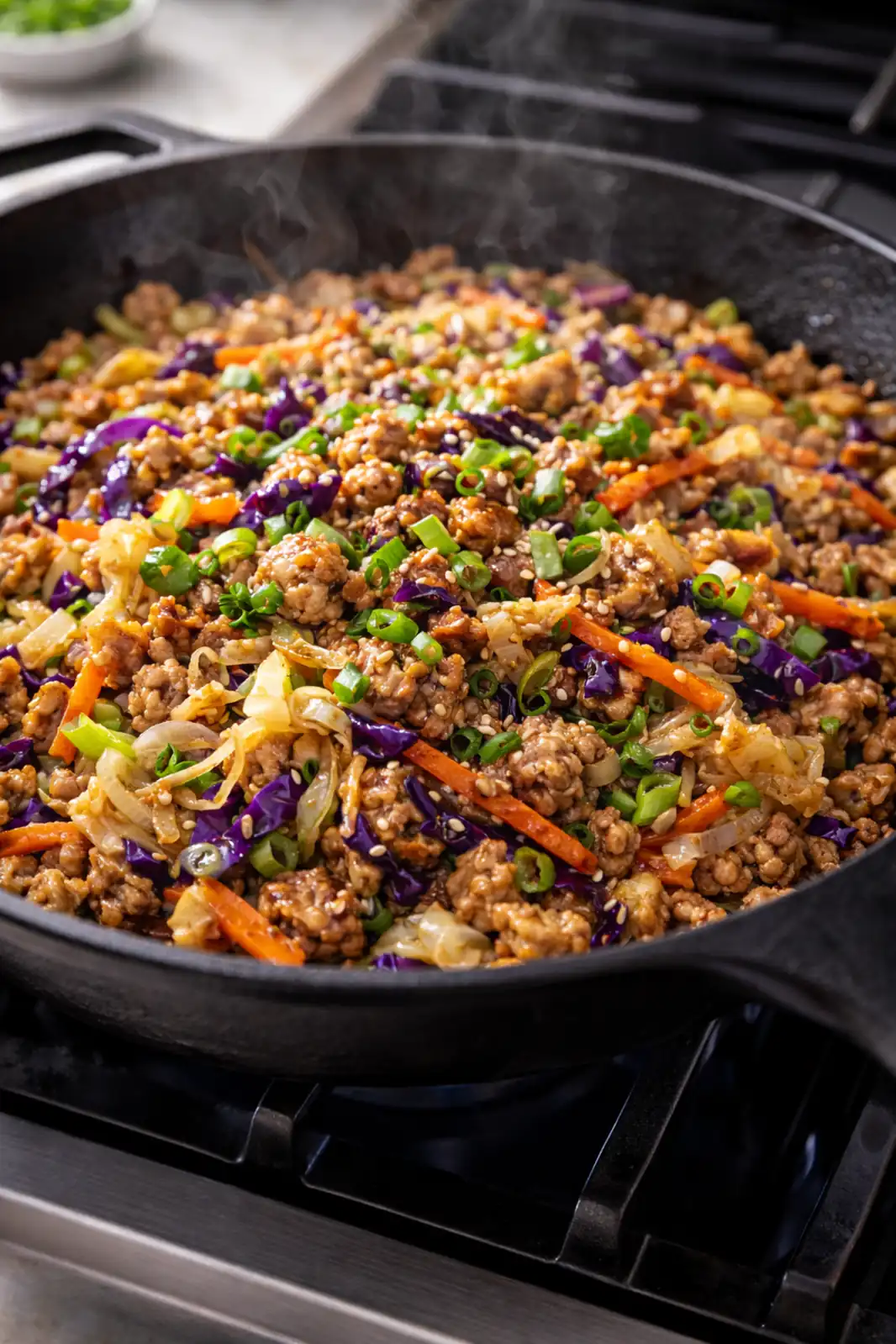
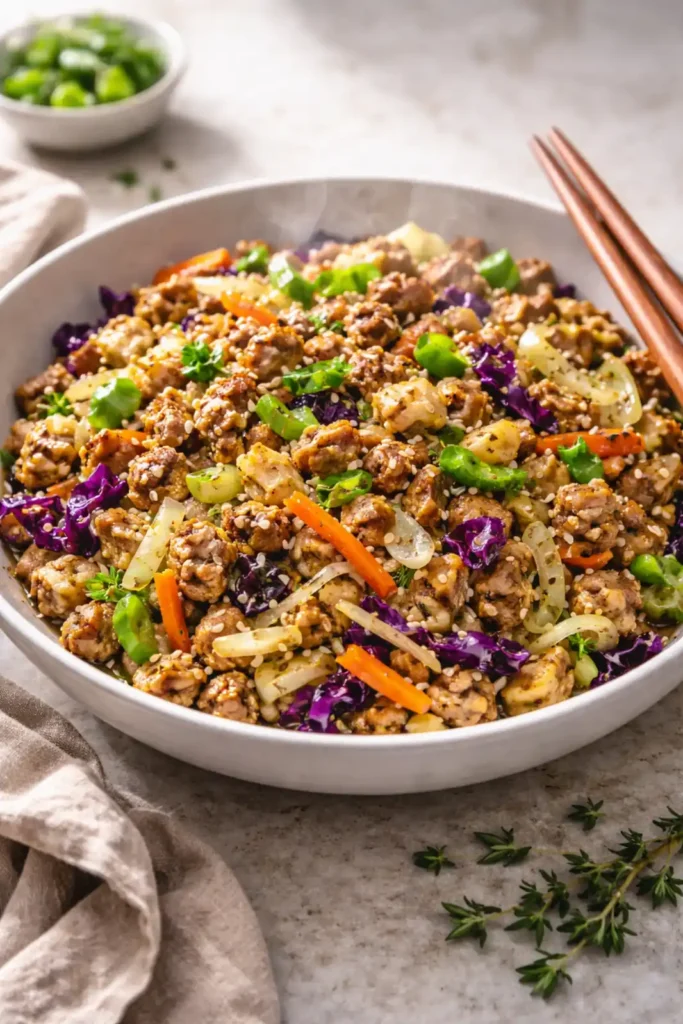
Egg Roll in a Bowl Recipe delivers the familiar flavors of a classic egg roll without the wrapper or deep-frying. This guide explains what makes the dish work, why it fits weeknight cooking, and how the main components create that savory, slightly tangy, sesame-forward taste people expect. You will also learn how to choose the best cabbage option, how to adjust seasoning for your pantry staples, and what to expect from the texture when you serve it plain or over rice. The full ingredients and instructions belong in the recipe card.
What Egg Roll in a Bowl Is and Why It Fits the Search Intent
Why this Egg Roll in a Bowl Recipe works
This Egg Roll in a Bowl Recipe works because it balances four things: savory ground turkey or pork, sweet onion and carrot, punchy garlic and ginger, and a salty-tangy sauce with soy sauce and rice vinegar. Cabbage acts as the bulk and the texture, while toasted sesame oil finishes the dish with the signature aroma people associate with egg rolls.
When and why people search for this recipe
People look for Egg Roll in a Bowl when they want a quick skillet dinner, a lower-carb alternative to takeout, or a meal-prep lunch that reheats well. It also fits busy weeks because it uses common pantry items and flexible produce options, including coleslaw mix, without needing specialty equipment.
Ingredient Insights and High-Level Flavor Context
Ingredient notes and smart swaps
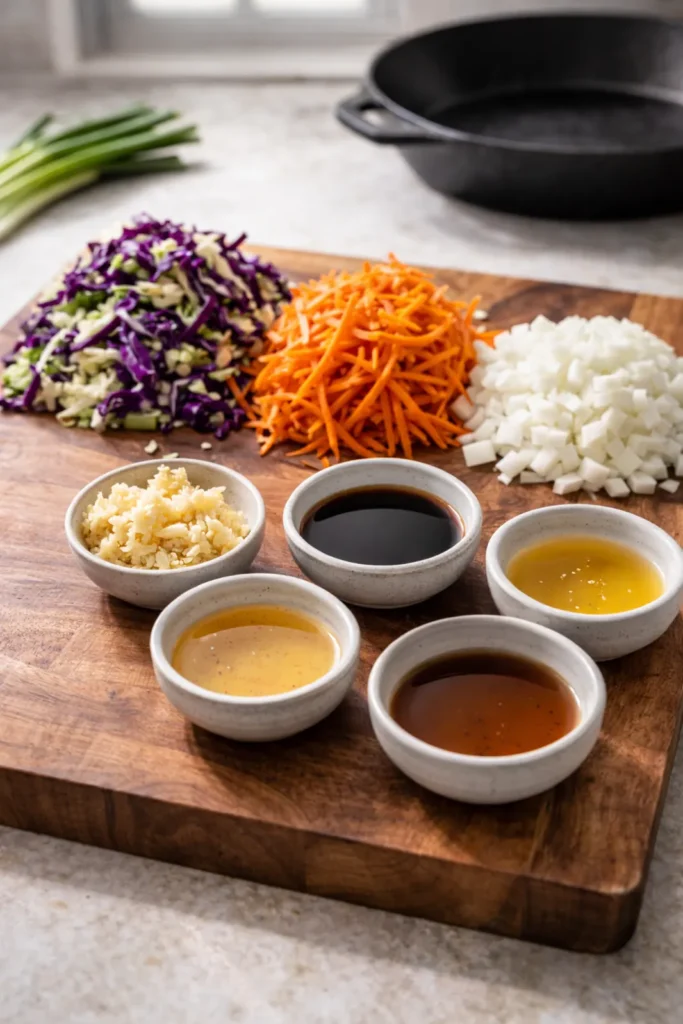
Ground turkey keeps the dish lighter, while ground pork adds more richness and a fuller “takeout-style” flavor. Sweet onion supports the natural sweetness in cabbage and carrots, but yellow onion also works. Fresh garlic and ginger give the strongest flavor, yet jarred versions can work in a pinch if used with restraint. Chicken broth helps loosen the pan drippings and keeps the mixture saucy without turning it watery. For cabbage, freshly shredded gives the best texture, but coleslaw mix offers speed and consistent shred size. Soy sauce brings salt and umami, tamari can reduce harsh saltiness and often fits gluten-free needs, and coconut aminos provide a milder, slightly sweeter option.
Flavor, texture, and method benefits
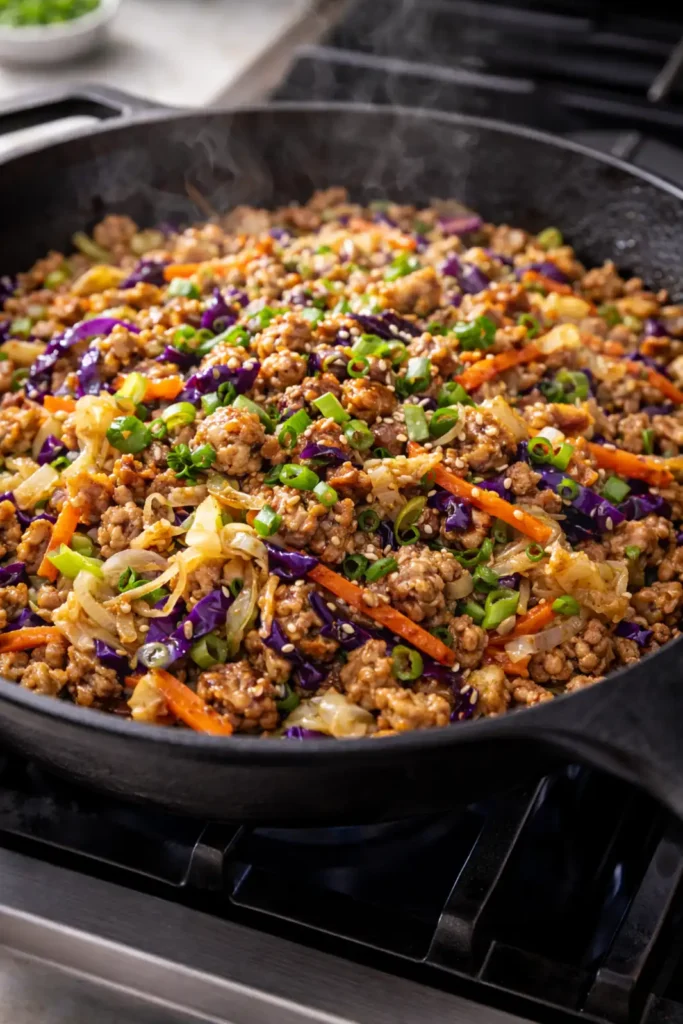
This dish tastes satisfying because it layers aromatics early and adds toasted sesame oil at the end for a clean, nutty finish. Rice vinegar sharpens the sauce so the cabbage tastes bright instead of flat. The cabbage cooks down from bulky shreds into a tender bite with a little resistance, which is the texture most people want in Egg Roll in a Bowl. Using one skillet keeps the flavors concentrated, and the sauce clings to the meat and vegetables instead of pooling. Serving it over white rice turns it into a heartier bowl, while serving it alone keeps the focus on the savory cabbage-forward stir-fry style.
Egg Roll in a Bowl Recipe
Ingredients
- 2 tablespoons olive oil divided
- ▢1 pound ground turkey
- ▢1 small sweet onion finely diced
- ▢1 cup shredded carrots
- ▢3 garlic cloves finely minced
- ▢1 teaspoon finely minced fresh ginger
- ▢¼ cup chicken broth
- ▢1 small head cabbage about 8 cups shredded see note
- ▢3 tablespoons soy sauce or Tamari
- ▢1 tablespoon rice vinegar
- ▢¾ teaspoon salt
- ▢½ teaspoon black pepper
- ▢1 teaspoon toasted sesame oil
- For Serving Optional:
- ▢Cooked white rice
- ▢Green onions green parts only thinly sliced
- ▢Toasted sesame seeds
- ▢Sriracha Mayo optional
Instructions
- Heat 1 tablespoon olive oil in a large skillet over medium heat. Add the turkey and cook until almost cooked through, about 5-6 minutes.
- Push the turkey to one side of the pan and add onion and remaining tablespoon of oil. Cook for 3-4 minutes, stirring occasionally. Add shredded carrots, garlic, and ginger and cook for 2 minutes, stirring frequently. Pour in the chicken broth and scrape any brown bits from the bottom of the pan.
- Add the cabbage, tamari or soy sauce, vinegar, salt, and pepper. Stir well and cover. Reduce heat to medium-low and cook for 12-15 minutes, or until cabbage has reached your desired tenderness. Remove from the heat and add toasted sesame oil.
- Serve egg roll in a bowl over white rice, if using, and top with green onions, toasted sesame seeds, and sriracha mayo, if desired.
Notes
Storage: Store leftovers in the refrigerator for 3-4 days. I would not recommend freezing this recipe since excess water will accumulate after thawing, causing the cabbage to become mushy.
Reheating: Warm up leftovers in a skillet over medium-low heat for the best taste and texture. You can also warm it up in the microwave, but it will be soggier.
Cabbage. Freshly shredded cabbage is best, but you can also use 2 bags of coleslaw mix or pre-shredded cabbage.
Soy sauce: Regular soy sauce works great, but can be a tad bit too salty. I prefer to use Tamari when making this recipe so you get all of the flavor without the extra sodium. Plus, it’s naturally gluten-free, too! Use coconut liquid aminos if on a Whole30 diet. Nutrition Calories: 293kcal, Carbohydrates: 21g, Protein: 32g, Fat: 11g, Saturated Fat: 2g, Polyunsaturated Fat: 2g, Monounsaturated Fat: 6g, Trans Fat: 0.02g, Cholesterol: 63mg, Sodium: 1367mg, Potassium: 909mg, Fiber: 7g, Sugar: 10g, Vitamin A: 5599IU, Vitamin C: 88mg, Calcium: 120mg, Iron: 3mg
User Value and Guidance
Tips for best results
Choose a large skillet so the mixture cooks evenly and releases moisture predictably. Use fresh aromatics when possible because garlic and ginger define the “egg roll” flavor profile. Taste and adjust saltiness at the end, especially if you use regular soy sauce instead of tamari. Aim for a cabbage texture that matches your preference, since some people like it barely tender while others prefer it softer. Finish with toasted sesame oil right before serving to keep its aroma vivid. Add toppings like green onion, sesame seeds, or sriracha mayo to control heat, richness, and crunch without changing the base dish.
Common mistakes and misconceptions
Egg Roll in a Bowl can taste too salty when the soy sauce runs strong or when additional salt goes in too early. It can also turn watery if the pan stays crowded or if the cabbage releases liquid faster than it cooks off. Overcooking the cabbage leads to a mushy texture that makes the dish feel heavy. Adding toasted sesame oil too soon can dull its flavor and make it disappear into the background. Expect a skillet stir-fry texture rather than a crisp egg roll bite, since the wrapper is not part of the dish.
Visitor Help
Storage, serving ideas, and variations
Store leftovers in an airtight container in the refrigerator for 3 to 4 days. Reheat gently in a skillet over medium-low heat to keep the cabbage closer to its original texture, or use a microwave when convenience matters more than crisp-tender bite. Serve Egg Roll in a Bowl over cooked white rice for a fuller meal, or serve it on its own for a lighter bowl. Add thinly sliced green onions, toasted sesame seeds, and sriracha mayo to customize heat and richness. For variation, switch ground turkey to pork for a more traditional flavor, or use coleslaw mix when you want faster prep and consistent shred size.
FAQ answers
Freshly shredded cabbage gives the best texture, but coleslaw mix or pre-shredded cabbage works well when you need convenience.
Regular soy sauce works, but it can taste too salty; tamari gives similar flavor with a less harsh salty edge and often fits gluten-free needs.
Coconut aminos provide a milder alternative when you want a soy-free option.
Freezing does not work well because the cabbage releases extra water after thawing, which can make the texture mushy.
Egg Roll in a Bowl keeps the comfort-food flavor profile simple: savory meat, tender cabbage, and a quick sauce finish. Use the recipe card for the full measurements and cooking details, then adjust toppings and serving style to fit the meal you want.