The Story
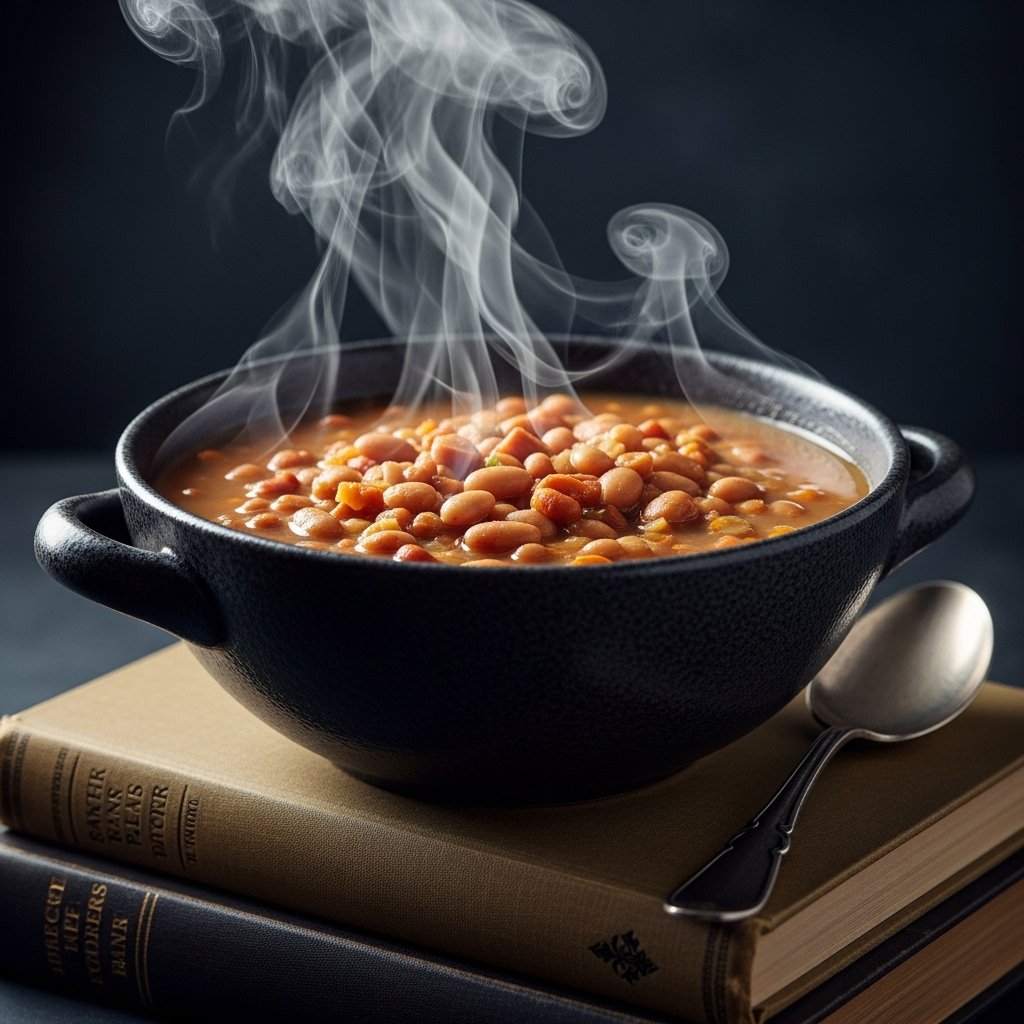
There is something almost magical about a pot of Ham and Bean Soup simmering on the stove. I remember my grandmother’s kitchen on cold winter weekends, the windows fogged up from the steam, and that addictive smell of smoky ham and herbs greeting me at the door. It wasn’t fancy food; it was pure comfort. She would toss a leftover ham bone into her big enamel pot, and hours later, we’d be scraping our bowls clean. This recipe is a tribute to those slow, cozy days. It is a massive hug in a bowl, perfect for using up holiday leftovers or just feeding a hungry crowd on a budget. Trust me, once you make this Ham and Bean Soup, it will become a legendary staple in your home too.
Selecting the Best Beans and Ham
Choosing Between Navy and Great Northern Beans
When you stand in the bean aisle, you might feel torn between Navy beans and Great Northern beans. Both are excellent, but they offer different experiences. Navy beans are small, dense, and hold their shape well, making them a classic choice for a soup with distinct bite. On the other hand, Great Northern beans are larger and have a slightly thinner skin. They tend to break down a bit more easily, which naturally thickens the broth and gives you a creamier finish without adding dairy. I personally love Great Northern beans for that velvety texture, but either one will result in a delicious meal.
Preparing the Ham Bone and Aromatics
Before you start cooking, give your ham bone a quick inspection. You want a bone that still has plenty of meat clinging to it. This meat will eventually fall off and become the savory chunks in your soup. Pairing this with a classic mirepoix—onion, carrots, and celery—creates a flavor base that is essential. Don’t chop your veggies too small; you want them to stand up to the long cooking time. Sautéing these aromatics in a little fat before adding the liquid releases their natural sugars, adding a layer of sweetness that balances the salty ham perfectly. This simple step is a proven flavor booster.
Simmering Your Ham and Bean Soup to Perfection
Soaking Tips for Tender Beans
To soak or not to soak? That is the common question. For this Ham and Bean Soup, soaking your dried beans overnight is the gold standard. It rehydrates them evenly, drastically reduces cooking time, and helps remove some of the indigestible sugars that cause gas. Simply cover your beans with plenty of cold water and let them sleep on the counter. If you are short on time, the “quick soak” method is a lifesaver: boil the beans for two minutes, cover the pot, remove from heat, and let them sit for an hour. While you can cook beans directly from dry, it takes much longer and the texture can be inconsistent. Soaking is a small effort that guarantees a smooth, tender bite every time.
Slow Cooking vs Stovetop Methods
This recipe is incredibly versatile and adapts well to your schedule. The stovetop method gives you complete control, allowing you to taste and adjust as you go. It typically takes about 2 to 3 hours of simmering. However, the slow cooker is a massive convenience for busy days. You can dump all the ingredients in the morning, set it on low for 7-8 hours, and walk away. When you return, the house smells amazing, and dinner is ready. The slow, enclosed heat of the crockpot often results in an even richer broth because no moisture evaporates. Whether you choose the active stovetop route or the passive slow cooker method, the result is a comforting bowl of soup that tastes like you slaved over it all day.

Ham and Bean Soup Recipe
Ingredients
- Base Ingredients:
- 1 pound dried navy beans or Great Northern beans, soaked overnight
- 1 ham bone with meat or 2 cups diced cooked ham
- 8 cups water
- 1 large onion diced
- 3 carrots sliced into rounds
- 3 celery stalks chopped
- Aromatics and Seasonings:
- 4 garlic cloves minced
- 2 bay leaves
- 1 teaspoon dried thyme
- ½ teaspoon black pepper
- Salt to taste add after cooking to control sodium
- Optional Enhancements:
- 2 tablespoons olive oil
- 1 diced potato for extra heartiness
- Fresh parsley for garnish
- Smart Substitutions:
- No ham bone? Use a smoked turkey leg or 2 cups of diced ham with 1 teaspoon liquid smoke
- Dietary restrictions? Swap ham for smoked paprika and vegetable broth for a vegetarian version
- Canned beans shortcut: Use 3 cans 15 oz each of navy beans, drained and rinsed
Instructions
- Prepare Your Base
- Drain and rinse your soaked beans, then add them to a large pot with the ham bone and 8 cups of water. Bring to a gentle boil over medium-high heat, then reduce to low heat for a steady simmer. Skim off any foam that rises to the surface during the first 30 minutes – this ensures a cleaner-tasting broth.
- Add the Aromatics
- After the soup has been simmering for about an hour, add your diced onion, carrots, celery, minced garlic, bay leaves, and thyme. The vegetables will infuse the broth with incredible depth while the beans continue to soften. At this point, your kitchen should start smelling absolutely amazing.
- Monitor and Maintain
- Continue simmering for another 1.5 to 2 hours, stirring occasionally and adding water if needed to maintain the liquid level. The beans should be tender enough to mash easily with a fork, and any meat should be falling off the bone. This is where the magic happens – patience creates that perfect, creamy texture.
- Remove and Shred the Ham
- Carefully remove the ham bone and let it cool slightly. Remove any meat from the bone, shred it into bite-sized pieces, and return it to the pot. Discard the bone and any fatty pieces. If using diced ham instead, simply let it continue cooking in the soup.
- Perfect the Texture
- For a heartier, thicker soup, mash about half the beans against the side of the pot with a wooden spoon, or use an immersion blender for just a few pulses. This creates a naturally creamy base while leaving plenty of whole beans for texture.
- Season to Perfection
- Remove the bay leaves and taste your soup. Add salt gradually – remember, ham can be quite salty, so start with small amounts. Adjust pepper and add fresh herbs if desired. The soup should taste rich, savory, and perfectly balanced.
- If your glaze softens after storage, give the donuts a quick re-glaze before serving. Fresh shine, no problem.
Notes
Calories: 280-320Fiber: 12-15 gramsProtein: 18-22 grams
Creating a Rich and Creamy Broth
Natural Thickening Tricks
The best way to thicken this soup is to use the ingredients already in the pot. Once the beans are tender, take a ladle or a potato masher and smash about one cup of the beans directly against the side of the pot. Stir them back in, and watch the broth instantly become creamy. This method is brilliant because it intensifies the bean flavor rather than diluting it with cornstarch slurry. Alternatively, you can scoop out a ladleful of beans and broth, blitz it in a blender until smooth, and pour it back in. This creates a seamless, silky texture that looks incredibly professional. It’s a simple, healthy hack that makes the soup feel decadent.
Seasoning for Maximum Flavor Depth
Seasoning Ham and Bean Soup requires a careful hand. Because ham is naturally salty, you should hold off on adding extra salt until the very end. If you salt too early, the broth can become inedible as it reduces. Instead, focus on aromatics like thyme, bay leaves, and black pepper early in the cooking process. A splash of apple cider vinegar or lemon juice right before serving is a secret weapon. This hit of acid cuts through the richness of the pork and wakes up all the flavors. If you want a smokier profile, a dash of smoked paprika or liquid smoke can be a game-changer. Taste often, and adjust until the balance makes you say “wow”
Serving, Storing, and Freezing Your Soup
Perfect Side Dish Pairings
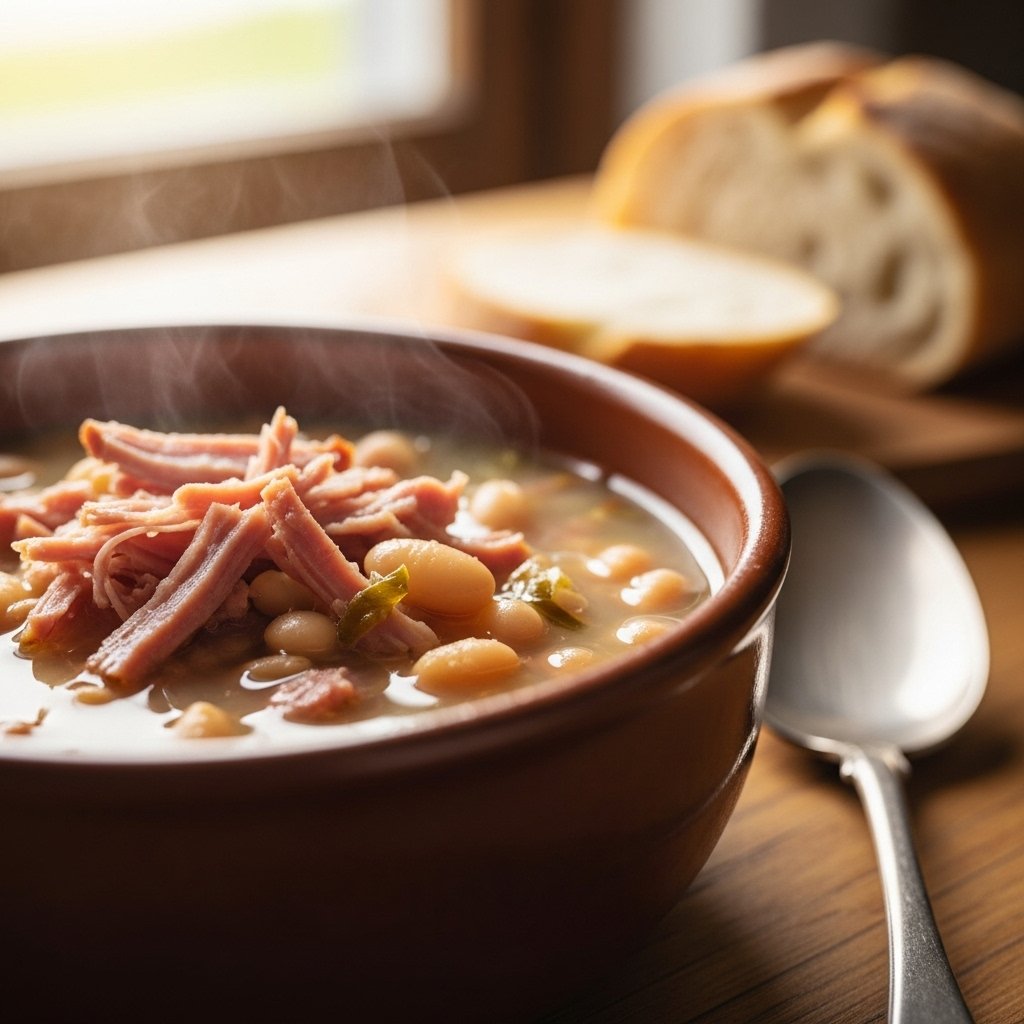
You simply cannot serve this soup without some form of crusty bread. A warm slice of cornbread is the classic partner, its sweetness perfectly balancing the salty, smoky ham. Alternatively, a chunk of crusty sourdough or a baguette is ideal for soaking up every last drop of that rich, starchy broth. If you want to add some freshness to the meal, a crisp green salad with a sharp vinaigrette works wonders. The acidity of the dressing cuts through the heaviness of the beans, cleansing your palate between bites. These simple sides transform a humble bowl of soup into a balanced and memorable dinner.
How to Freeze and Reheat Leftovers
One of the best things about Ham and Bean Soup is how well it freezes. To store it, let the pot cool completely before transferring the soup into airtight containers. It will stay fresh in the refrigerator for up to 5 days. for longer storage, portion it into freezer-safe bags or containers; it will keep beautifully for up to 3 months. When you’re ready to eat, thaw it in the fridge overnight. You may notice the soup has thickened significantly—this is normal. Simply add a splash of water or broth when reheating on the stove or in the microwave to bring it back to the perfect consistency. This make-ahead capability makes it a lifesaver for busy weeks.
Frequently Asked Questions
Can I make this soup without a ham bone?
Yes, absolutely. While a bone adds collagen and richness, you can use smoked ham hocks, a smoked turkey leg, or just diced high-quality smoked ham. If using only diced meat, consider using chicken or vegetable broth instead of water to make up for the lost flavor depth.
Do I have to soak the beans?
Soaking is highly recommended but not strictly mandatory. Soaking reduces cooking time by about half and ensures the beans cook evenly. If you skip soaking, expect to simmer the soup for 3-4 hours, and you may need to add more liquid as it cooks.
Why are my beans still hard after hours of cooking?
Old beans are the most common culprit; if they have been in your pantry for years, they may never soften fully. Acidic ingredients like tomatoes or vinegar can also prevent beans from softening, so add those only after the beans are tender. hard water can also be a factor; if you have very hard water, try using filtered water.
Can I use canned beans instead of dry?
Yes, for a faster version, you can use canned beans. Drain and rinse 3-4 cans of Navy or Great Northern beans. Since they are already cooked, simmer the soup with the ham and veggies for just 30-45 minutes to let the flavors meld. Add the beans in the last 20 minutes to prevent them from turning to mush.
Conclusion
This Ham and Bean Soup Recipe is more than just a meal; it is a reliable, comforting tradition that nourishes both body and soul. With its rich, smoky broth, tender beans, and melt-in-your-mouth ham, it delivers a gourmet flavor experience from humble, affordable ingredients. Whether you let it simmer all day on the stove or set it and forget it in the slow cooker, the result is always a winner. So, save that ham bone, grab a bag of beans, and treat yourself to a bowl of this hearty goodness. It’s the perfect way to warm up your kitchen and your family.